Health and Safety Policy for Brompton Cleaner
 Brompton Cleaner is committed to maintaining a safe, healthy, and respectful working environment for staff, clients, and anyone who may be affected by our cleaning activities. This policy sets out the principles, responsibilities, and practical standards that guide our approach to health and safety across all cleaning tasks. It applies to routine domestic cleaning, specialist cleaning, and any related services carried out by our team.
Our aim is to prevent injury, reduce risk, and support well-being through careful planning, safe equipment use, and consistent procedures. We believe that cleaning safety is not a single action but a daily practice built into every task, from preparing a workspace to completing a final check. All operatives are expected to work responsibly, report hazards promptly, and follow approved methods at all times.
 This policy is reviewed regularly to ensure it remains effective, current, and suitable for the services we provide. It reflects our commitment to safe working, clear communication, and continuous improvement. Where risks change, our procedures will be updated accordingly so that the welfare of everyone involved remains the priority.
Risk assessment is central to our cleaner health and safety approach. Before beginning work, we assess the environment for hazards such as wet floors, exposed wires, slippery surfaces, sharp objects, unstable furniture, or poor ventilation. If a task cannot be completed safely, it must be paused until the issue is controlled or the area is made secure. Operatives are trained to identify risks early and act cautiously.
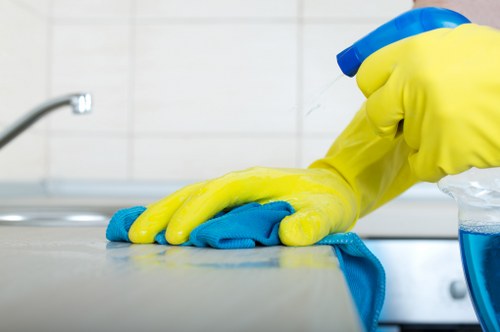
All cleaning materials must be used according to manufacturer instructions and internal procedures. This includes correct dilution, safe storage, and proper labelling. Hazardous substances should never be mixed unless expressly approved, and only suitable products are to be used on each surface. Personal protective equipment may be required depending on the task, including gloves, masks, eye protection, or non-slip footwear. Protective measures must always be worn when needed and maintained in good condition.
 Equipment must be checked before and after use. Machines, tools, and accessories should be clean, undamaged, and suitable for the job. Faulty items must be removed from service immediately and reported through the correct internal process. Electrical equipment should be handled carefully, kept away from moisture where possible, and stored securely after use. Safe maintenance extends the life of equipment and reduces the chance of accidents.
Manual handling is another important part of our policy. Staff should avoid lifting loads that are too heavy or awkward and should use correct posture, controlled movement, and team support when necessary. Where possible, cleaning supplies and equipment should be transported using trolleys or other suitable aids. Repetitive strain and overexertion are reduced by planning tasks sensibly and rotating activities when appropriate.
We expect all employees to behave professionally and to respect the safety of others. This includes keeping work areas tidy, avoiding unnecessary obstruction, and warning others when floors are wet or surfaces are being treated. Special care must be taken around children, pets, older adults, and vulnerable individuals. A safe cleaner does not rush, ignore concerns, or take shortcuts that could create harm.
In the middle of our operations, communication remains essential. If a client requests a task that appears unsafe, unsuitable, or outside the agreed scope, the cleaner must seek clarification before proceeding. The same applies if conditions change during the appointment. Our staff are encouraged to stop work when needed and to raise concerns without delay so that safety can be restored before continuing.
Training and supervision support this policy. Team members are instructed in safe working practices, emergency awareness, proper product use, and the handling of routine hazards. New staff receive induction guidance and are not expected to work unsupervised until they demonstrate competence. Refresher training may be provided to reinforce standards and address emerging risks. A cleaning policy is only effective when it is understood and followed consistently.
Accidents, incidents, and near misses must be reported as soon as possible. Even minor events can highlight a weakness in procedure and should be recorded so that improvements can be made. First aid arrangements, emergency exits, and evacuation procedures must be respected wherever work is carried out. If fire, spillage, injury, or another emergency occurs, staff should act calmly, protect life first, and follow the relevant emergency response process.
 We also recognise the importance of hygiene in protecting health. Hands should be washed or sanitised regularly, particularly after handling waste, chemicals, or contaminated materials. Waste must be disposed of correctly, and contaminated cloths or disposables should be managed safely to reduce the spread of germs. This supports both occupational health and the general cleanliness expected from a professional service.
 Management responsibility includes providing suitable tools, maintaining safe systems, and fostering a culture where safety is valued. Every worker has a responsibility to follow this policy, use common sense, and contribute to a safer workplace. Failure to comply with safety procedures may result in disciplinary action because unsafe conduct can endanger colleagues, clients, and property.
This policy is intended to be practical, clear, and adaptable. It does not replace detailed task-specific instructions where those are required, but it does establish the core standards for health and safety for cleaners working under the Brompton Cleaner name. By applying these principles consistently, we aim to deliver a professional service while protecting well-being, minimising risk, and upholding a high standard of care.
Brompton Cleaner will continue to review and improve its practices in line with operational needs, feedback from risk assessments, and changes in working methods. Our commitment remains simple: to carry out every cleaning task as safely and responsibly as possible.